The Art of Layered Lighting: How to Create Atmosphere in Your Home
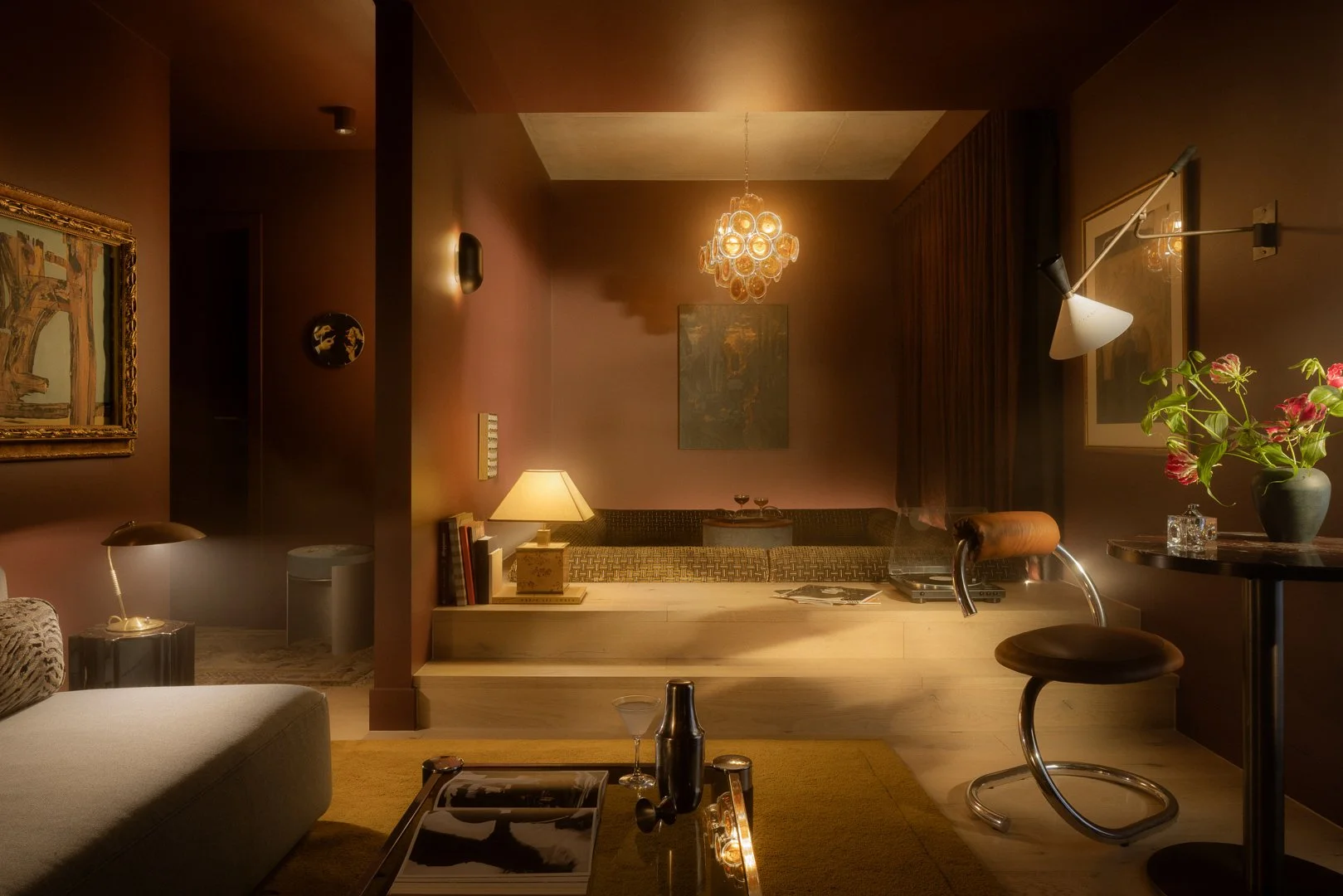
Seven light sources at different heights and intensities are visible in this photo of Snug Club.
Lighting is one of the most powerful elements in an interior, yet it's often overlooked. We spend so much time thinking about furniture, colour, art and materials, only to rely on a grid of downlights or a single pendant to illuminate the entire room.
But good lighting isn't simply about being able to see. It shapes how a room feels.
The most inviting interiors rarely rely on a single light source. Instead, they use a combination of light at different heights, intensities and directions to create warmth, depth and atmosphere. A pendant might provide a focal point, a floor lamp can soften a shadowy corner, while a table lamp brings a pool of warm light closer to eye level. Together, these layers give a room dimension - and allow its mood to change throughout the day.
What Is Layered Lighting?
Layered lighting is simply the idea that no single light source should be expected to do everything.
Generally, lighting can be thought about in a few different ways: ambient lighting provides the overall illumination of a room; task lighting gives us focused light where we need it; and accent or decorative lighting highlights art, objects and architectural details while contributing to the atmosphere of the space.
Not every room needs every type in equal measure. The important thing is variation.
I particularly love lighting at different heights. Ceiling lights naturally cast light downwards, but adding lamps, wall lights and low-level lighting creates smaller pockets of illumination throughout a room. This contrast between light and shadow is what gives an interior depth and makes it feel intimate rather than uniformly bright.
And, just like furniture or art, the light fittings themselves can become part of the composition of a room. A sculptural lamp can be beautiful even when it isn't switched on.
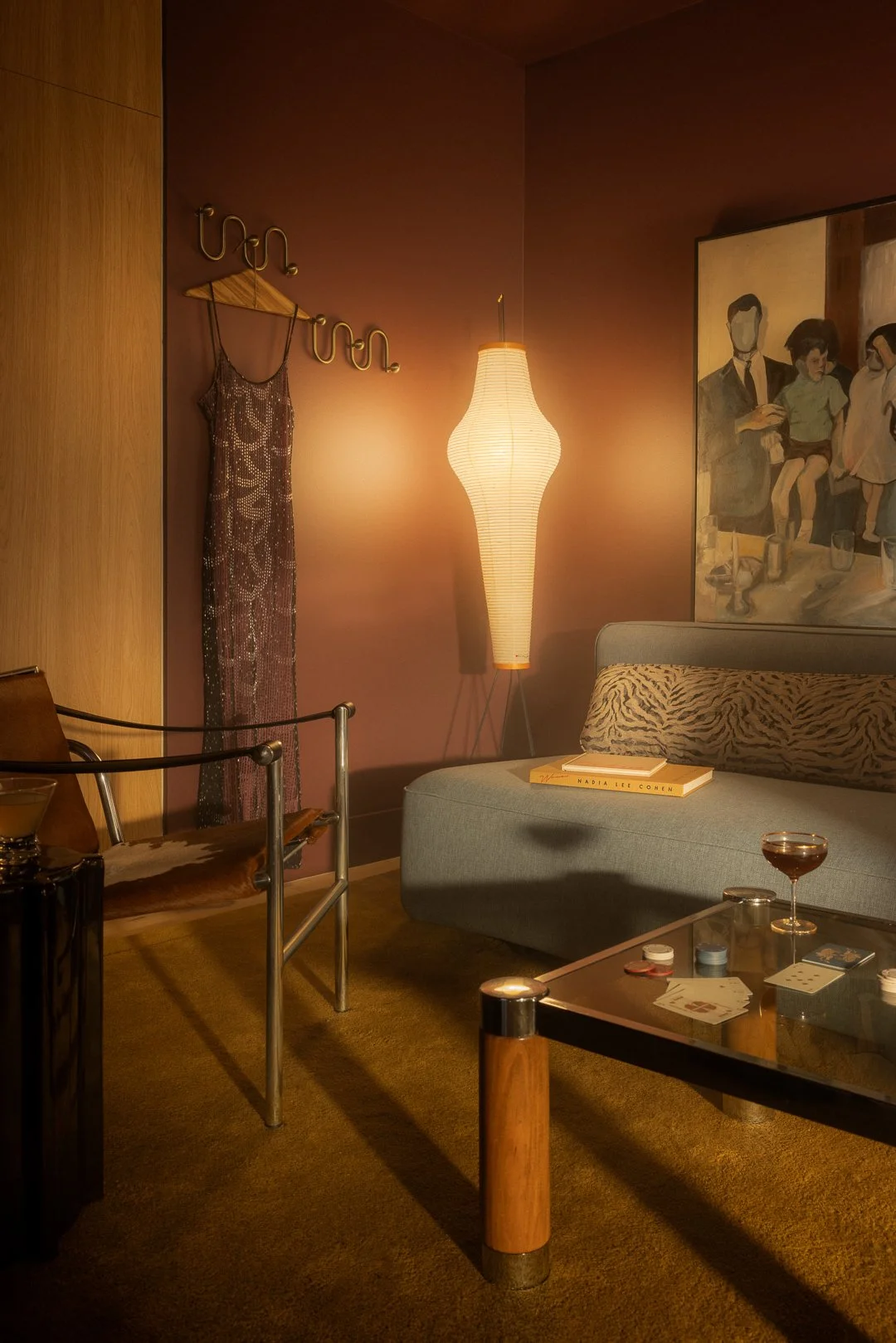
The Akari floor lamp creates a soft diffused glow
Layered Lighting at Snug Club
Lighting became particularly important when designing Snug Club, our 23-square-metre studio apartment in Fitzroy.
With such a small footprint, every design decision needed to work hard. Rather than trying to make the apartment feel larger by flooding it with light, we wanted it to feel intimate, cocooning and atmospheric.
At the centre of the apartment is the sunken conversation pit, which functions as a lounge, daybed and dining space. Above it, a Murano chandelier creates a focal point and draws you into the centre of the room. The coloured glass gives the light a warmth and character that feels entirely different from conventional overhead lighting.
From there, we built up the lighting in layers.
An Akari floor lamp creates a soft, diffused glow from one corner, while vintage table lamps bring light down to a more intimate, human scale. A vintage illuminated plexiglass mirror functions as both an artwork and a light source, its reflection helping to amplify the glow around the room.
Perhaps the most subtle layer is the concealed LED lighting around the conversation pit itself. Rather than illuminating the room from above, it creates a low wash of light that makes the sunken lounge appear to glow from within.
Each source does something slightly different, but together they completely change the experience of the apartment.
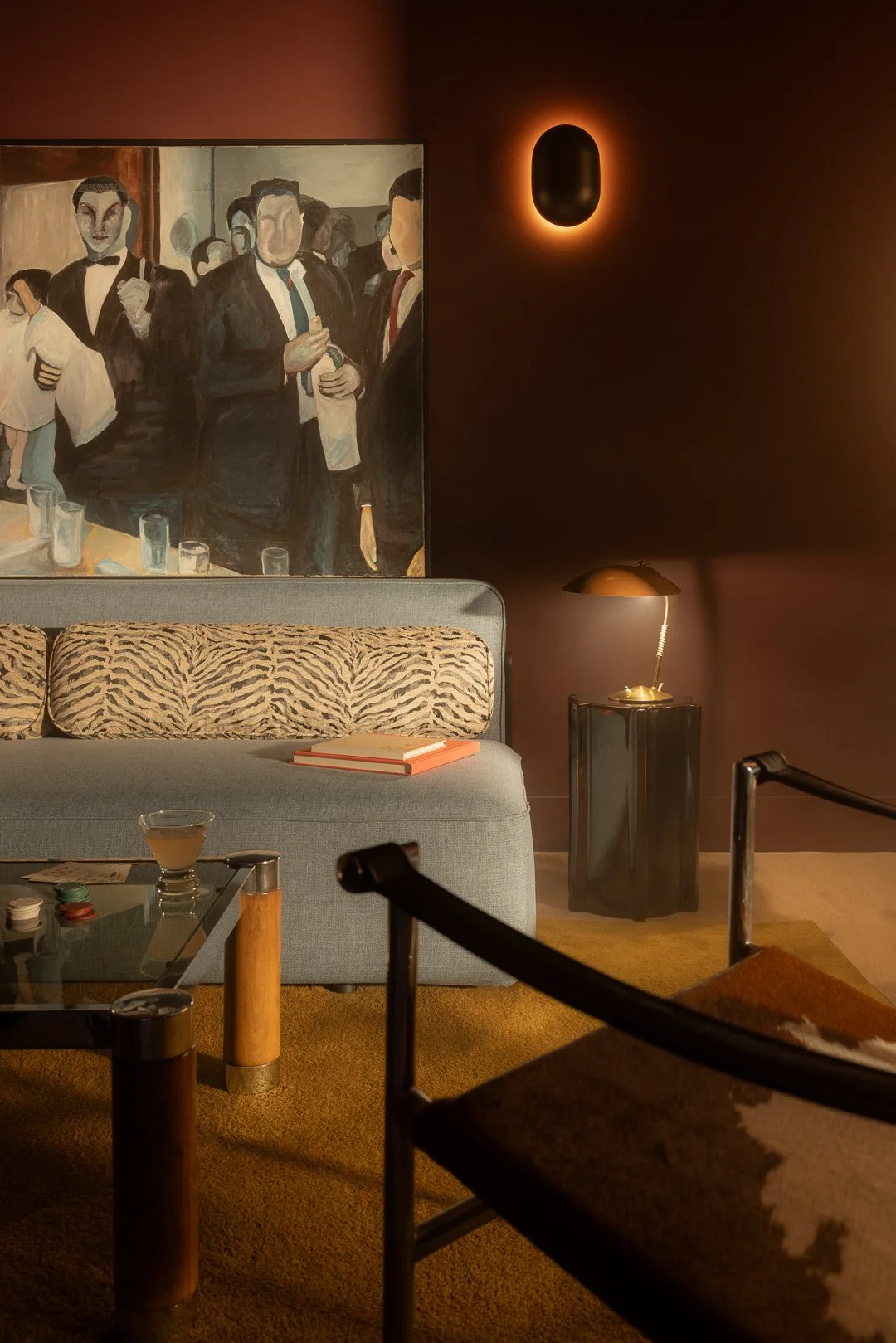
A backlit wall light highlights the burgundy wall colour whilst a small vintage table lamp acts as a reading light whilst also bouncing light off the side table’s reflective surface
Designing for Mood, Not Just Brightness
One of the benefits of having multiple light sources is that you don't need (or necessarily want) all of them switched on at once.
This is where layered lighting becomes less about decoration and more about how a home actually lives.
At Snug Club, the combination of lights can change depending on the occasion. The chandelier and lamps can create a brighter, more sociable atmosphere when friends are over, while in the evening the apartment can be reduced to the soft glow of a table lamp, the Akari and the concealed lighting around the pit.
The architecture and furniture haven't changed, but the feeling of the room has.
I think this is something we sometimes forget when designing our homes. A room doesn't need to have one fixed mood. The way we use a living room on a Sunday morning is completely different to the way we might use it over dinner with friends or late at night with a glass of wine.
Lighting gives us the ability to respond to those different moments.
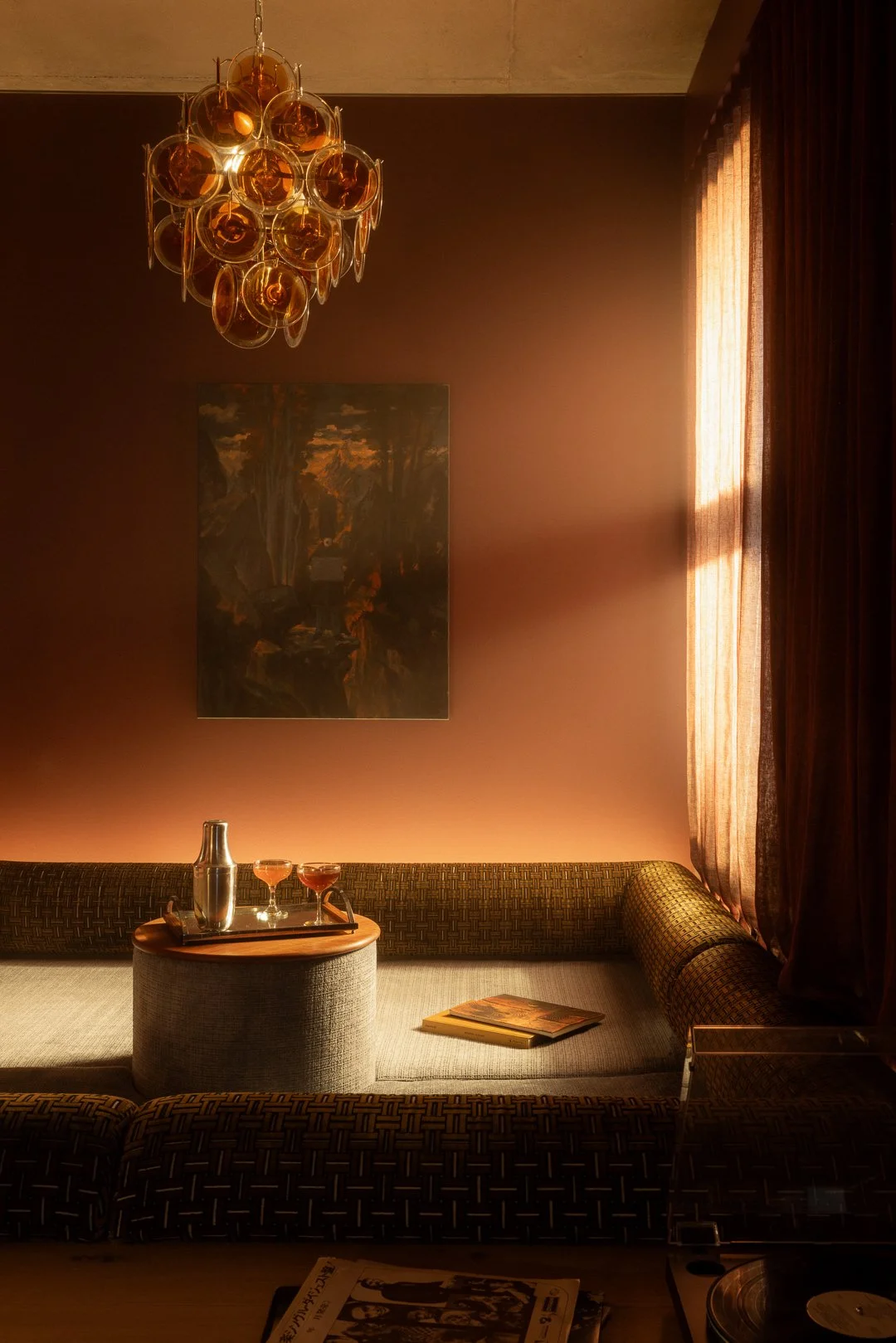
The Murano chandelier above the pit acts as a focal point whilst the LED lighting traces the edges of the pit softly illuminating it.
How to Layer Lighting in Your Own Home
The place most people get this wrong is trusting the overhead light to do the whole job. It's worth turning it off entirely for an evening and seeing what the room actually needs, because the answer is rarely "more light," it's usually "light from somewhere else." A dark corner wants a floor lamp, not a brighter downlight. A console or side table can hold a small lamp that does more for the room's warmth than any ceiling fitting will. An artwork or an architectural detail you're proud of deserves its own source rather than whatever spills onto it by accident.
Height matters more than most people think. If every light in a room is coming from the ceiling, the room will always feel a little flat, a little like an office. Bringing at least one source down to eye level or below is usually the single biggest shift available without touching a wall or spending real money.
And I'd always rather a room have somewhere to fall into shadow than be lit evenly from corner to corner. Even light everywhere reads as practical, not atmospheric. The rooms that actually feel good to sit in have contrast - a bright pool here, a dim corner there - the same way the best-lit restaurants and bars never light a single surface at full brightness.
On the quality of the light itself: I generally favour warm light in living spaces - around 2700K - with dimmers wherever they're possible. The aim isn't to eliminate darkness. It's to use light and shadow together, on purpose, rather than defaulting to whatever the ceiling gives you.
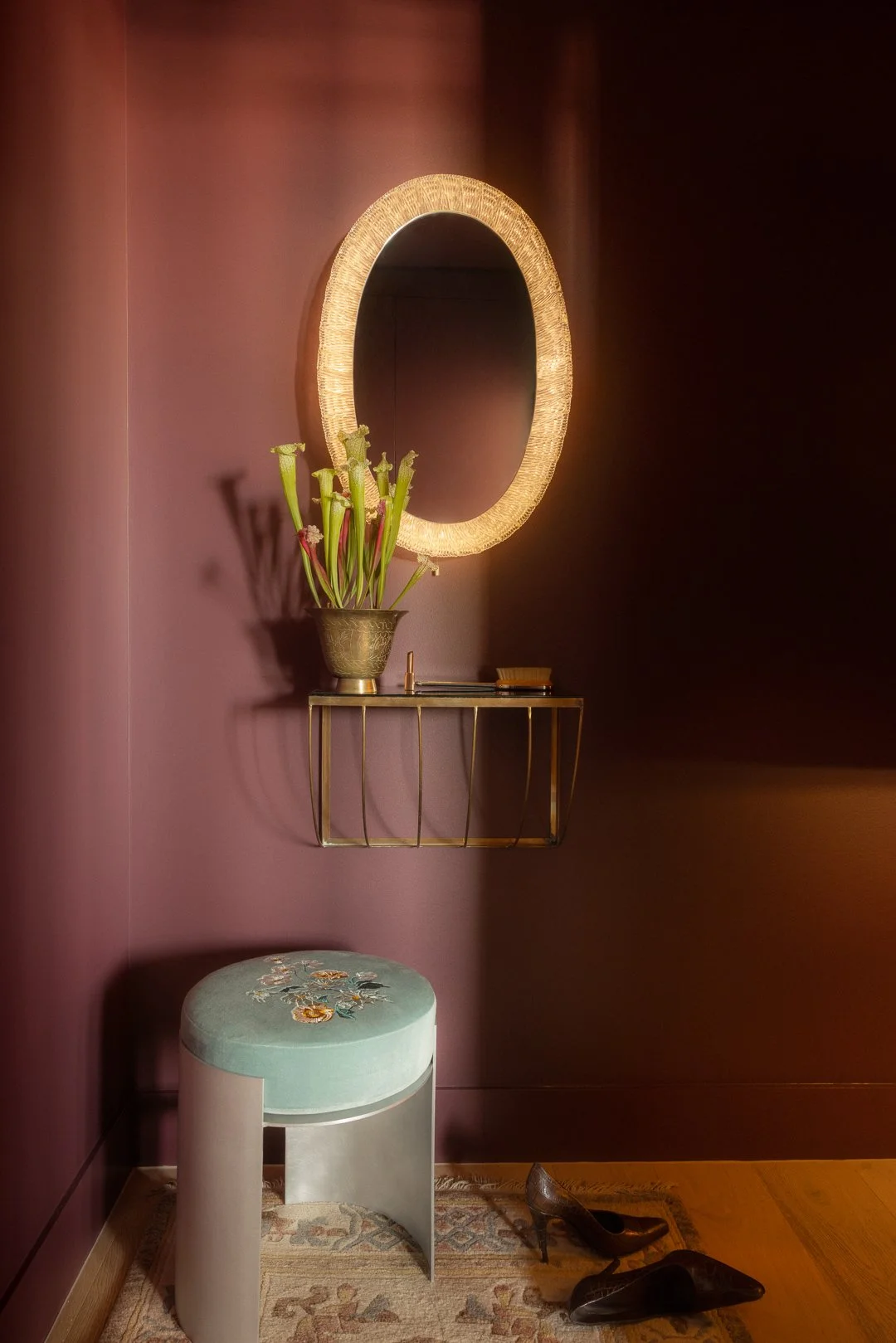
The vintage plexiglass mirror also doubles as a light source for this dark corner of the room
A More Considered Kind of Light
The best lighting schemes aren't necessarily the brightest. They're the ones that give you options.
Layering light allows a room to shift throughout the day, highlights the things you love, and brings warmth and depth to an interior in a way that furniture alone can't achieve.
Snug Club may only be 23 square metres, but its lighting demonstrates something that applies to homes of every size: sometimes the difference between a room that simply looks good and one that feels wonderful to be in is how it's illuminated.